
The Real Cost of Ignoring Algae on Your Roof in Leland NC
- Nick Corbelli
- Apr 27
- 5 min read

Ignoring algae on your roof in Leland NC can shorten your shingle life by 5 to 10 years and lead to a roof replacement costing $8,000 to $25,000, far more than the $300 to $600 you would spend on a professional soft wash. The longer the algae sits, the deeper it eats into the limestone in your shingles, stripping the protective ceramic granules that cannot grow back. With 150+ five-star Google reviews across Wilmington and Leland, Window Cleaning Wizards has seen this firsthand from homeowners who waited too long.
A homeowner in Shelmore at Brunswick Forest called us in early April after noticing dark streaks on the north-facing slope of her roof. She thought it was dirt that would wash off in the next thunderstorm. It was Gloeocapsa magma, a hardy roof algae that thrives in the heat and humidity of Leland and Wilmington, and it had already been eating her shingles for two summers.
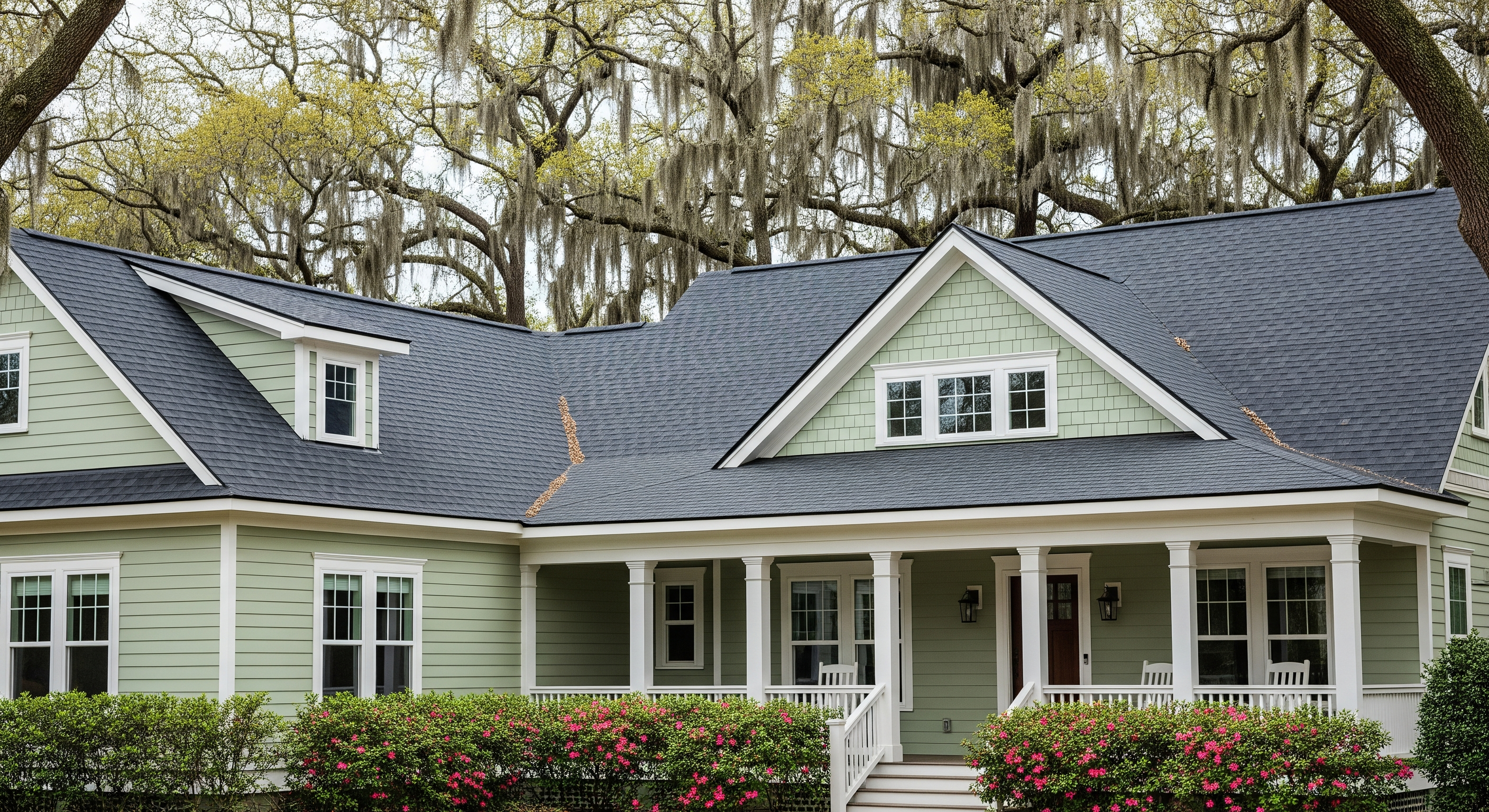
How Does Roof Algae Actually Damage Your Shingles?
Roof algae is a living organism that feeds on the limestone filler used to manufacture asphalt shingles. As the algae colonies grow, they eat into the shingle surface and pry loose the small ceramic granules that protect the underlying asphalt from UV damage.
Once those granules are gone, they do not come back. Sun exposure dries out the asphalt, the shingles get brittle, and small cracks start to form along the edges. Wind, heavy rain, and the salt-laden air drifting in from the Cape Fear River accelerate the process. According to Owens Corning, major shingle manufacturers consider neglected algae growth a leading cause of premature roof failure.
Most asphalt shingles are rated for 20 to 30 years. Roofs covered in untreated algae often need replacement in 12 to 18 years instead.
How Much Money Can Algae Cost You Long Term?
The math is uncomfortable. A new asphalt roof on a typical 2,000-square-foot home in Leland runs $8,000 to $15,000, and on larger homes in Brunswick Forest or Mallory Creek that number climbs to $18,000 to $25,000 depending on pitch, layers, and decking condition.
Compare that to ongoing maintenance.
Service | Typical Cost | Frequency |
Soft wash roof cleaning | $300 to $600 | Every 2 to 3 years |
Roof replacement | $8,000 to $25,000 | Once every 12 to 30 years |
Lifetime maintenance (20 years) | $2,000 to $4,000 | 6 to 8 cleanings |
Spending $2,000 to $4,000 on cleanings over two decades to keep a roof on its full warranty timeline is one of the highest-return maintenance decisions a Leland homeowner can make. We break this comparison down further in our guide to roof washing versus roof replacement.
Will Homeowners Insurance Cover Algae Roof Damage in NC?
In most cases, no. Homeowners insurance is designed to cover sudden, accidental damage like a tree falling in a storm, not gradual deterioration from neglect. Algae growth is classified as a maintenance issue, and that category is almost always excluded from standard policies in North Carolina.
Most major shingle manufacturers also list neglected algae and moss damage as a common reason for warranty denial. If your roof is replaced because of algae you let go for years, you will most likely pay out of pocket.
That single fact is why so many of our customers in Cape Fear National and Hawkeswater treat roof washing as routine home maintenance rather than a "someday" project.
Why Does Algae Spread Faster on Roofs in Leland?
Three local conditions stack up to make Leland roofs especially vulnerable.
First, humidity. Brunswick County summers regularly sit at 80 to 90 percent humidity for weeks at a time. Algae cells need moisture to spread, and our climate gives them all they want.
Second, shade and tree cover. Many Leland communities, including Brunswick Forest and Magnolia Greens, were built around mature pines and live oaks intentionally preserved on the lots. Beautiful, but it means north-facing roof slopes stay damp for hours after every rain.
Third, airborne spores. Once a single roof in a neighborhood has Gloeocapsa magma, wind carries the spores from house to house. Last summer, we cleaned three homes on the same cul-de-sac in The Lakes section of Brunswick Forest in the same week because the streaks had spread between neighbors after one untreated roof seeded the rest.
Gutter Cleaning in Carolina Beach, NC
Can a Roof Wash Reverse the Damage?
A professional soft wash will kill 100 percent of the algae and restore the original color of your shingles. Soft washing is a low-pressure cleaning method that uses biodegradable cleaning solutions to dissolve algae, mildew, and moss without disturbing the granules on your shingles.
What it cannot do is rebuild granules that have already been stripped away. If the algae has been growing for several seasons, you may notice that some areas of the roof look slightly thinner or smoother after cleaning. That is the long-term damage showing through.
The good news is that stopping the algae now prevents the damage from getting worse. A roof that has lost five percent of its life expectancy is fixable. One that has lost fifty percent is not. Timing matters too, which is why we wrote a separate guide on the best time of year to clean your roof in our climate.
How Often Should Leland Homeowners Have Their Roof Cleaned?
Most Leland homes do well on a 2 to 3 year cleaning cycle. Heavily shaded homes, properties bordering wooded lots in Brunswick Forest, or homes near standing water in Mallory Creek may need it every 18 to 24 months.
The early warning signs are easy to spot from the ground:
Dark streaks running down the slope of the roof, almost always on the north or northwest face
Greenish tint to shingles in shaded areas
Black spots or smudges that look like dirt but do not wash off in rain
Visible moss or lichen patches at the edges of shingles
If you can see any of these from your driveway, the algae has been working for at least a year.
Window Cleaning in Carolina Beach, NC
Frequently Asked Questions About Roof Algae in Leland NC
Does roof algae damage spread to my neighbor's house?
Yes. Gloeocapsa magma releases airborne spores that wind can carry hundreds of feet, which is why entire blocks of Brunswick Forest or Mallory Creek often develop streaks at the same time. Cleaning your roof reduces the spore load in your immediate neighborhood and protects nearby homes.
How quickly will black streaks come back after a roof wash?
A properly performed soft wash should keep your roof streak-free for 2 to 3 years in Leland's climate. Heavily shaded homes or homes with overhanging tree branches may see new growth begin around 18 months and benefit from a slightly tighter cleaning schedule.
Is it safe to walk on my roof to inspect for algae?
No. Walking on asphalt shingles, especially older ones, is dangerous and can cause additional granule loss and personal injury. Inspect from the ground using binoculars, or have a professional roof cleaning company in Leland do a no-obligation walk-around for you.
What is the difference between algae, moss, and lichen on my roof?
Algae appears as flat dark streaks. Moss grows as raised green clumps that hold moisture against shingles. Lichen is a hard greenish-grey crust that bonds tightly to the shingle surface and is the most damaging of the three.
By Nick Corbelli, Owner of Window Cleaning Wizards
Nick and his brother Chris have been cleaning homes across Wilmington, Leland, and surrounding communities for years. With 150+ five-star Google reviews, they bring real hands-on experience to every job.
If your roof in Leland is showing dark streaks, the cleanest, cheapest move is to act now rather than wait another summer. Call Nick and Chris at 910-727-4336 for a free, no-pressure roof inspection and quote.
This article was written with AI assistance and reviewed by Nick Corbelli, owner of Window Cleaning Wizards.


Comments