
Does Living Near the Intracoastal Waterway Mean More Exterior Cleaning?

Updated: Sep 23
Yes. Homes along the Intracoastal Waterway need exterior cleaning roughly twice as often as homes a few miles inland. Salt spray, constant humidity, and still air let algae and mineral film build up faster on siding, glass, and railings.
With five-star Google reviews all across Wilmington and Leland, Window Cleaning Wizards has seen this firsthand on hundreds of homes.
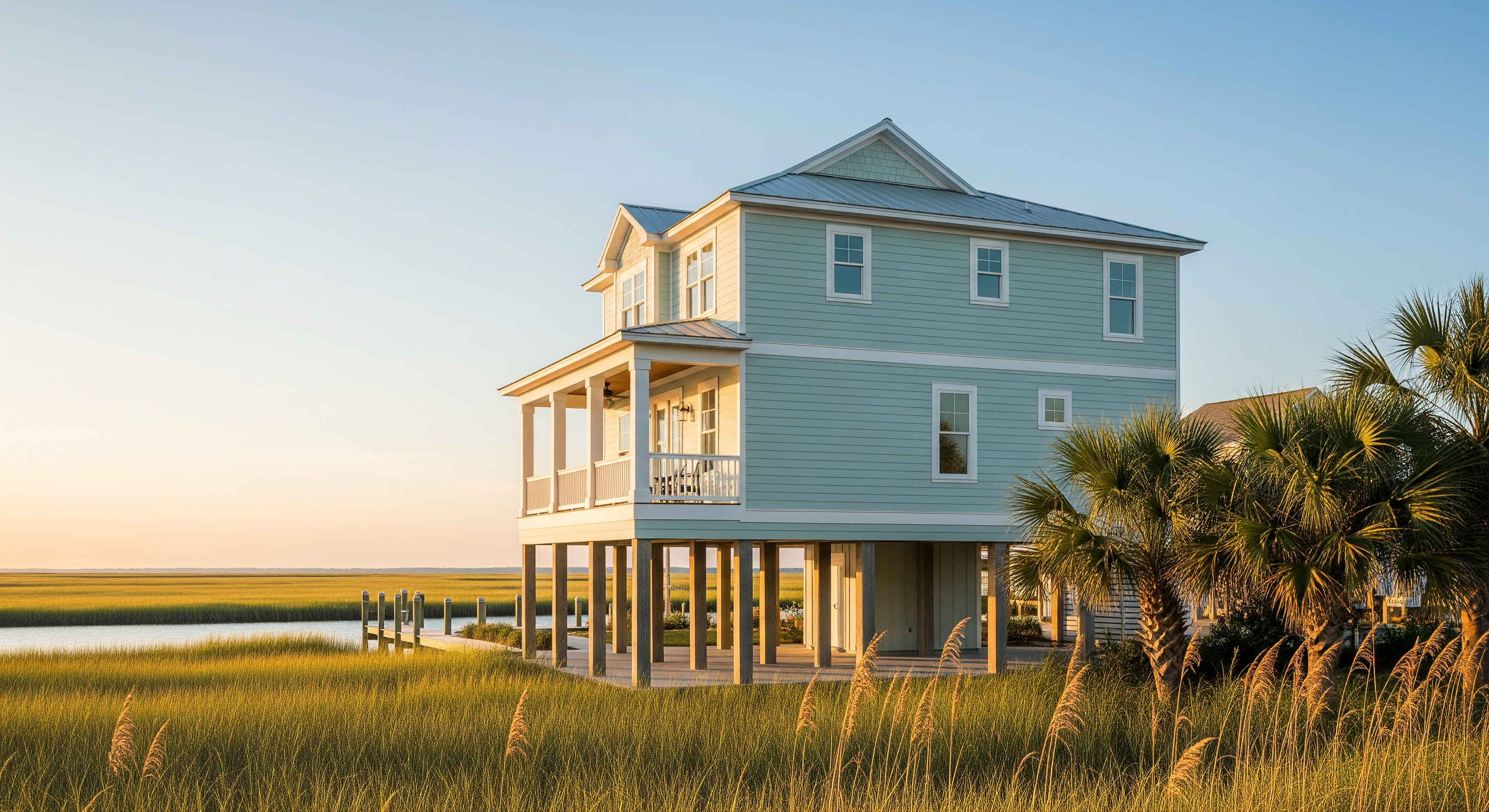
Here is the number that surprises most people: the same house plan, built by the same builder, will look noticeably different after three years depending on which side of Military Cutoff it sits on. We clean both. The waterfront one always needs us sooner.
This is not about the house being built worse. It is about what the air is carrying. Here is what changes when you live on the water, how much more often you actually need cleaning, and what it costs.
Does a Home on the Intracoastal Waterway Really Get Dirtier?
Yes, and the difference is easy to see side by side. Waterfront homes in Wilmington collect a mix of salt film, algae, and mildew that inland homes get far more slowly.
Three things stack up on the water. The first is salt. Salt spray is the fine mist of seawater that wind carries inland, and it settles on glass, screens, and siding as an invisible mineral film. It does not rinse off in a normal rain, and it holds moisture against the surface long after the rain stops.
The second is humidity. Wilmington summers run dew points above 65 degrees for months at a stretch, and dew point is the temperature at which air becomes saturated and moisture condenses onto surfaces. On the waterway that number sits higher and longer, so your north-facing walls stay damp most of the night. The EPA notes that mold needs only moisture to grow and recommends keeping humidity down to control it, which is exactly the condition a waterfront wall cannot escape.
The third is airflow, or the lack of it. Homes tucked into marsh coves and creek bends in Porters Neck sit in still, shaded pockets where a wall can go a full day without direct sun.
Distance matters more than people expect. USGS research on the Atlantic coast shows that airborne chloride concentrations are highest near the shore and drop off quickly moving inland. That drop-off is why a home in Ogden and a home on the waterway in Landfall age so differently.
What Does Salt Air Actually Do to Your Siding and Windows?
Salt air does two things at once. It leaves a haze you can see, and it feeds growth you cannot.
On glass, the visible part is a dull mineral film that makes windows look foggy even the day after a rain. Homeowners often think the glass has failed or the seals have gone bad. Usually it has not. It is salt and hard-water minerals sitting on the surface, and it comes off with the right cleaning.
On siding, salt is the setup rather than the problem itself. It draws and holds moisture, and that steady dampness is what lets algae and mildew take hold in the shaded seams and under the eaves.
House Washing in Wrightsville Beach, NC
Metal takes the worst of it. Screens, gutter hangers, railing brackets, and light fixtures corrode years earlier on the water than they do inland. Our post on what salt air does to shingles in Kure Beach covers the same process on a roof, and our guide to window washing and salt air in Hampstead walks through the glass side of it.
How Much More Often Should Waterfront Homes Be Cleaned?
Roughly twice as often. Here is how the schedule shifts as you move away from the water.
Location | House wash | Window cleaning |
On the Intracoastal Waterway or oceanfront | Every 6 to 9 months | Every 3 to 4 months |
Within 1 mile of the water | Every 9 to 12 months | Every 4 to 6 months |
2 to 5 miles inland | Every 12 to 18 months | Every 6 months |
Well inland, such as Leland or Castle Hayne | Every 18 to 24 months | Twice a year |
Orientation shifts these numbers as much as distance does. A north-facing wall that never gets direct sun will green up in half the time of the sunny south side of the same house, which is why we often treat one elevation more aggressively than the rest.
Docks, bulkheads, and boat lifts sit in a category of their own. Those surfaces take direct spray and stay wet, so they usually want attention every six months.
Which Parts of a Waterfront Home Need the Most Attention?
The water-facing elevation, every time. It takes the prevailing wind, the most spray, and usually the most glass.
On a waterfront job we work these areas hardest:
The water-facing wall and its window glass, screens, and tracks, where salt film is heaviest
Soffits and eaves on shaded elevations, where mildew starts before it spreads down the wall
Railings, gutter hangers, and light fixtures, which corrode first
Decks, docks, and pool surrounds, which turn slick with algae faster than any other surface
North-facing walls, regardless of which way the water sits
Method matters more here than inland. Soft washing is a low-pressure cleaning method that uses cleaning solutions to kill algae and mildew at the root instead of blasting them off with force. On a waterfront home that is the only sensible approach, because high pressure drives salt-laden water behind siding and into the exact seams you are trying to protect.
House Washing in Carolina Beach, NC
We washed a home backing onto the waterway in Landfall this spring where the street side still looked close to new and the water side had gone grey-green across two full stories. Same paint, same age, same builder. The only difference was which way the wall faced.
Does Living Near the Water Cost More for Exterior Cleaning?
Not much more per visit, but more per year, because you need more visits.
A house wash in the Wilmington area generally runs $300 to $650 for a single-story home and $450 to $950 for a two-story. Waterfront homes usually land in the upper half of those ranges, since heavier buildup takes more solution and longer dwell time, and dock or pilings access adds labor.
The real difference is frequency. Two washes a year instead of one is what actually moves the annual number, and that is the tradeoff for living on the water. Our post on why everything gets dirty so fast around Wilmington explains the underlying cause, and our guide on keeping a home looking new year-round lays out a maintenance rhythm that works.
Staying on a schedule is cheaper than catching up. Algae that has been feeding for two years bonds into the surface and needs stronger treatment, and badly corroded screens and fixtures get replaced rather than cleaned.
When Window Cleaning Wizards works a waterfront home, we soft wash rather than pressure the siding, protect flower beds and move potted plants before any solution goes on, clean window tracks and screens instead of just the glass, and stand behind it with a satisfaction guarantee at the price we quoted.
Frequently Asked Questions About Exterior Cleaning Near the Intracoastal Waterway
How far inland does salt air still affect my house?
Salt reaches noticeably farther than most homeowners expect, with effects showing up a mile or more from the water and fading gradually after that. Homes in Ogden and Porters Neck that are not directly on the waterway still see salt film on glass and screens.
Will rain rinse the salt off my windows?
No. Rain carries its own minerals and evaporates on the glass, which often leaves windows spottier than before. Salt film needs an actual wash with the right solution to come off.
Is pressure washing safe for a house on the water?
High pressure is the wrong tool for waterfront siding, because it forces salty water behind the panels where it sits and keeps working on the fasteners. Soft washing cleans the same surface without driving moisture into the wall.
When is the best time of year to schedule a waterfront house wash?
Late spring and early fall work best in Wilmington. A spring wash clears the pollen and winter buildup, and a fall wash takes off the algae that grew through the humid summer months before it settles in for winter.
By Nick Corbelli, Owner of Window Cleaning Wizards
Nick and his brother Chris have been cleaning homes across Wilmington, Leland, and surrounding communities for years. With a long track record of five-star Google reviews, they bring real hands-on experience to every job.
If your home sits on the water and the siding or glass is not staying clean as long as it used to, we can put you on a schedule that actually fits where you live. Call Nick and Chris at 910-727-4336 for a free estimate, or request a quote online anytime.
This article was written with AI assistance and reviewed by Nick Corbelli, owner of Window Cleaning Wizards.


Comments