

Power Washing Before Painting: Is It Necessary in Wilmington?

Yes, power washing before painting is necessary in Wilmington, because fresh paint will not bond to siding coated in dirt, chalk, mildew, and salt residue. A clean, dry surface is what lets the new coat grip and last. Plan on 24 to 48 hours of drying time before the first brush stroke.
Nick and Chris Corbelli have been cleaning homes across the Cape Fear region for years, and this is one of the most common questions they hear before a repaint.
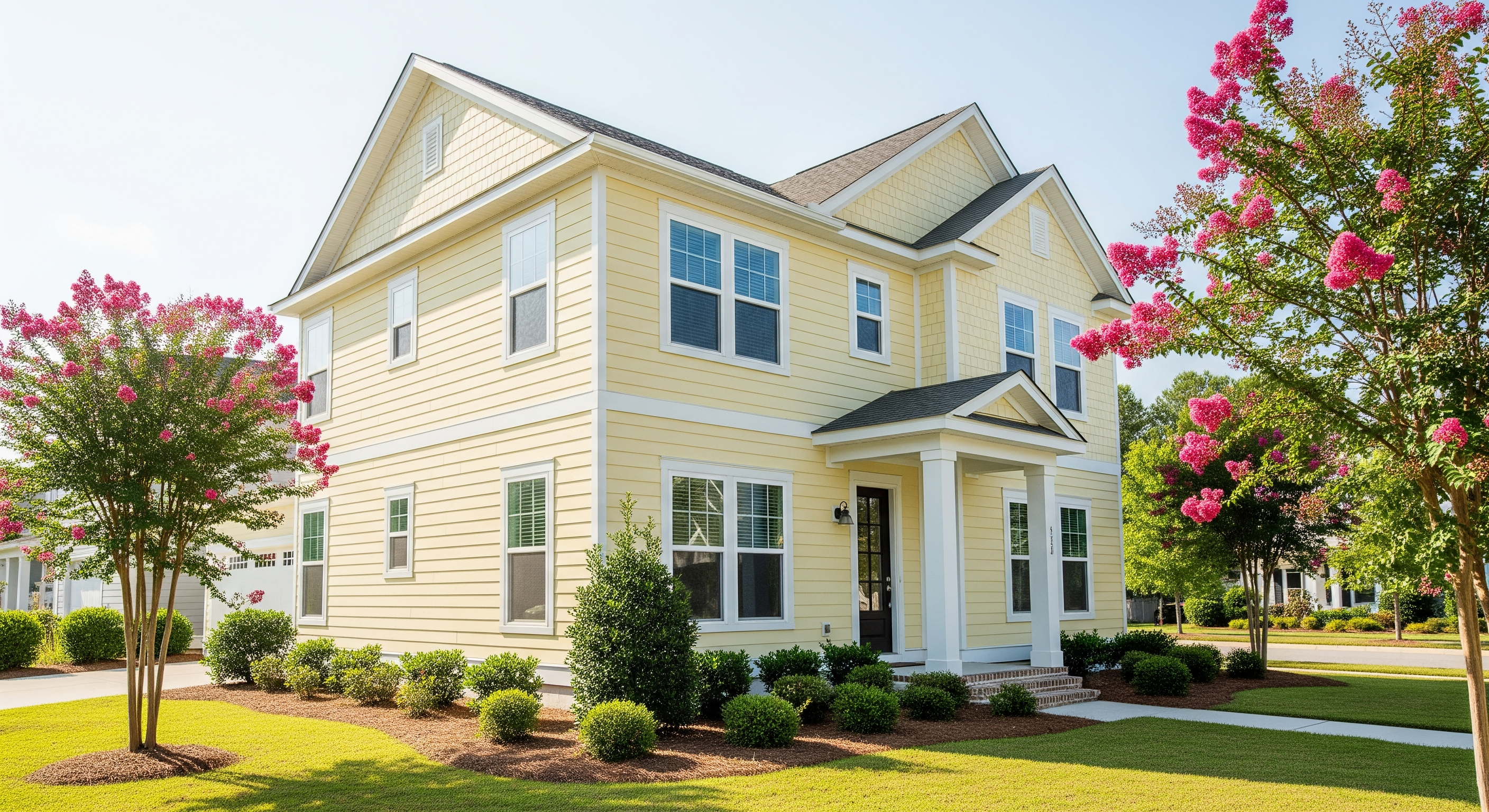
A homeowner in Magnolia Greens called us last month, a week before her painters were due to start. She wanted to know if a quick rinse with the garden hose would be enough to prep the siding. It would not have been, and skipping a real wash is one of the fastest ways to watch a fresh paint job start peeling within a year or two.
Paint is only as good as the surface under it. Here is what power washing actually does before a repaint, how long you need to wait afterward, which method fits your siding, and what the prep wash costs in Wilmington and Leland.
Why Do You Have to Power Wash a House Before Painting?
You have to power wash before painting because paint bonds to a clean surface, not to the layer of grime sitting on your siding. Power washing is a cleaning method that uses a high-pressure water stream to strip dirt, chalk, mildew, and loose paint off exterior surfaces so the new coat can grip the material underneath.
In our damp Wilmington climate, three things build up on siding and quietly ruin paint adhesion: mildew, chalk, and salt. Chalking is the fine, powdery residue that forms on older paint as the sun breaks down its surface, and it stops new paint from sticking. Rub your hand across faded siding, and if it comes away with a light dusty film, that is chalk that has to be washed off before a single drop of paint goes on.
Mildew is the bigger problem. If you paint over mildew, it keeps growing underneath the fresh coat and pushes the paint off from behind, which is why so many "new" paint jobs fail in patches. Salt air along the Cape Fear adds a fine mineral film that does the same thing on homes near the water.
When paint fails this way, the fix is not a touch-up. The whole surface has to be scraped, rewashed, and repainted, so a skipped wash that saved a few hundred dollars up front can cost thousands to correct a year or two down the road.
Sherwin-Williams, one of the largest paint makers in the country, tells homeowners to pressure wash a house to remove dirt, mildew, and loose paint and then let it dry before painting. Skipping that step is the single most common reason an exterior paint job fails early, and a proper wash can nearly double how long the new paint lasts.
House Washing in Wilmington, NC
If your siding has heavy mildew or years of buildup, the prep wash is a job on its own. Our guide on how much house washing costs in Wilmington NC walks through what a full wash involves and what it should run.
How Long Should You Wait After Power Washing Before You Paint?
Wait 24 to 48 hours after power washing before you paint most homes, and longer for wood or stucco. The siding has to be fully dry, because moisture trapped under fresh paint leads to bubbling, peeling, and new mildew growth within months.
Different surfaces hold water for different amounts of time. Vinyl and brick shed water and dry fastest. Wood and stucco are porous, so they soak up more water and need extra time, especially during a humid Wilmington summer.
Surface | Typical Dry Time Before Painting |
Vinyl siding | 24 to 48 hours |
Brick | 24 to 48 hours |
Hardie board (fiber cement) | 24 to 72 hours |
Wood siding or trim | 48 to 72 hours |
Stucco | Up to a full week |
Weather matters as much as the surface. A sunny, breezy day dries siding far faster than the muggy, still air we get in July and August, and morning dew can reset the clock overnight. Painters check that wood is at or below 15 percent moisture before they start, and after a wash near the water in Landfall or Wrightsville Beach, reaching that number can take a full extra day.
There is a back end to the timing too. Try to paint within about 30 to 60 days of the wash. Wait much longer than that and pollen, salt, and fresh mildew begin settling back onto the siding, and you are right back where you started with a surface that needs cleaning again.
Should You Power Wash or Soft Wash Before Painting?
It depends on the surface, and for most Wilmington homes the right prep is a soft wash, not raw pressure. Soft washing is a low-pressure cleaning method that uses cleaning solutions to kill mold and algae at the root instead of blasting them off with force.
High pressure has its place. Concrete, brick, and sound fiber cement can take a strong stream to lift chalk and old flaking paint. But the same pressure that cleans a driveway will carve into wood, crack vinyl, and drive water behind the panels, which is exactly what you do not want right before you seal the surface with paint.
We ran into this on a repaint prep in Landfall, where a two-story home had soft, sun-worn wood trim under the eaves. A hard pressure wash would have splintered it. We soft washed the body of the house to kill the mildew and hand-cleaned the delicate trim, so the painters got a clean, sound surface without any new damage to work around.
House Washing in Wrightsville Beach, NC
Vinyl siding is the surface to be most careful with. Too much pressure at the wrong angle forces water up under the panels, where it can sit for weeks. Our guide on why you should never pressure wash your vinyl siding explains the damage, and our overview of what soft washing is and why Wilmington homes need it covers the gentler method we use for prep.
Home services experts at Angi note that matching the cleaning method to the siding is what protects the surface you are about to paint. On a mixed exterior, that often means one wash that uses low pressure on the walls and higher pressure only on the hard surfaces below.
How Much Does It Cost to Power Wash a House Before Painting in Wilmington?
Power washing or soft washing a house before painting in Wilmington usually runs between $250 and $600 for a single-story home and $400 to $900 for a two-story, depending on the square footage, the siding type, and how much mildew has built up. Renting a machine and doing it yourself looks cheaper, at roughly $35 to $175 a day, but the gap closes fast once you add detergent, your own time, and the risk of a ladder.
The DIY route carries two real costs beyond the rental fee. The first is damage. The wrong tip or too much pressure can gouge wood, crack vinyl, or blast water into the wall, and you may not see that trapped moisture until the new paint starts to bubble weeks later. The second is safety, since reaching the second story means balancing on a ladder while managing a running pressure hose that kicks back when you pull the trigger.
When Window Cleaning Wizards preps a home for paint, the wash includes the details that protect both the job and your property:
We match the method to the surface, soft washing delicate siding and using pressure only where it belongs
We protect flower beds and landscaping so cleaning solution does not harm your plants
We rinse the whole house evenly so no chalk, salt, or mildew is left behind for the painters
We back every job with a satisfaction guarantee, and the price we quote is the price you pay
A clean prep wash is a small slice of the total repaint budget, and it is the slice that decides whether your paint lasts five years or fifteen. Paying a pro to do it right is cheap insurance on a much larger investment.
Frequently Asked Questions About Power Washing Before Painting in Wilmington NC
Do I really need to power wash if my siding looks clean?
Yes. Chalk, salt film, and early mildew are often invisible from a few feet away but still block paint from bonding. A wash removes that thin layer so the new coat grips the siding, which matters even more on homes near the water in Wilmington and Wrightsville Beach.
Can I paint the same day I power wash my house?
No. The siding needs to dry fully first, which usually takes 24 to 48 hours and longer for wood or stucco. Painting over damp siding traps moisture underneath and leads to peeling and mildew within months.
Will power washing damage my siding before painting?
It can if the wrong pressure is used on the wrong surface. Wood and vinyl are easy to damage with high pressure, which is why a soft wash is the safer prep for most Wilmington homes. Matching the method to the material protects the surface you are about to paint.
How soon after washing should the painting start?
Paint within about 30 to 60 days of the wash. Waiting longer lets pollen, salt, and new mildew settle back onto the siding, which can undo the clean surface you paid for.
By Nick Corbelli, Owner of Window Cleaning Wizards
Nick and his brother Chris have been cleaning homes across Wilmington, Leland, and the surrounding communities for years. With a long track record of five-star Google reviews, they bring real hands-on experience to every job.
If you are planning to repaint, get the wash done right first. Call Nick and Chris at 910-727-4336 for a free estimate, or request a quote online anytime. We will match the cleaning method to your siding, protect your landscaping, and hand your painters a clean, dry surface that holds paint for years.
This article was written with AI assistance and reviewed by Nick Corbelli, owner of Window Cleaning Wizards.


Comments