
How Oxidation Damages Vinyl Siding in Wilmington NC and What to Do About It

Vinyl siding oxidation is the chalky white residue that forms on the surface of vinyl panels when ultraviolet light breaks down the plastic, and in Wilmington NC it can usually be removed with a professional soft wash if it is caught before the color fades permanently. Light to moderate oxidation cleans off in a single service, while heavy decades-old oxidation may require siding replacement.
Nick and Chris Corbelli have been cleaning homes across the Cape Fear region for years, and this is one of the most common questions they hear from owners whose siding leaves a chalky film on their fingers when they touch it. Vinyl is one of the most common siding materials on homes in Wilmington, Leland, and the surrounding beach towns, and the local climate is uniquely hard on it.
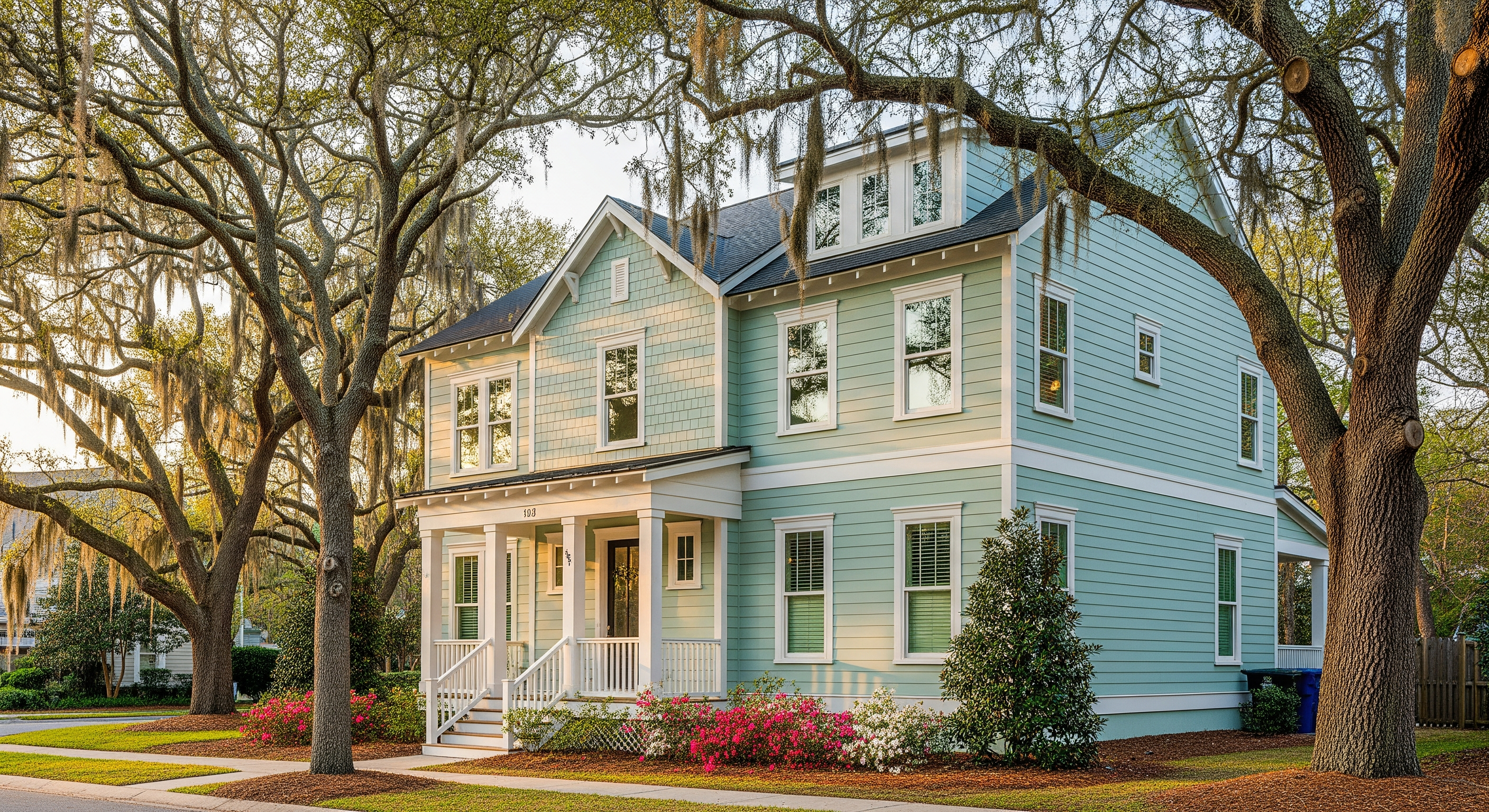
Wilmington vinyl takes a beating that inland homes never see. Between June and September, surface temperatures on south-facing walls can climb past 130 degrees, and salt-laden ocean breezes carry chloride particles into every seam. That combination of UV, heat, and salt accelerates oxidation in the Cape Fear region far faster than national averages.
What Is Vinyl Siding Oxidation and Why Does It Happen in Wilmington NC?
Oxidation is a chemical reaction in which ultraviolet light, oxygen, and heat slowly break down the polymer chains in vinyl siding, releasing a fine chalky residue made of pigment and stabilizer particles. The siding underneath is still structurally fine, but the surface layer has degraded and is no longer protecting the color or the panel.
In Wilmington and Leland, three factors speed this process more than almost anywhere else in the state:
High UV exposure. Cape Fear summers deliver six months of intense direct sun, especially on south and west-facing walls.
Heat cycling. Vinyl expands and contracts with every temperature swing. A 50-degree daily swing in spring forces the surface to flex thousands of times a year.
Salt and humidity. Salt particles drifting in from the ocean and the Intracoastal Waterway bond with degraded vinyl and accelerate the chalking process.
A homeowner in Magnolia Greens called us last summer worried that her south-facing siding looked faded compared to the north side of her home. The chalk wiped off easily on a clean hand, and a single soft wash restored the panels to within one shade of the original color.
How Can You Tell If Your Siding Is Oxidized?
There are four simple tests that confirm vinyl siding oxidation on a Wilmington home. Most owners discover at least one of these by accident while gardening or pressure washing a driveway.
Test | What to Do | What It Means |
Hand test | Wipe a clean hand across the siding | Chalky white residue on your palm |
Hose test | Spray the wall with a garden hose | Streaks of white wash down the surface |
Color test | Compare a sun-facing wall to a north-facing wall | The sunny side looks lighter and flatter |
Touch test | Press a fingernail lightly into a panel | Surface feels powdery instead of smooth |
If you see any one of these, the siding has begun oxidizing. If you see all four, the damage is moderate to severe, and a soft wash should be scheduled within the next 30 days before the chalk bonds permanently.
Can You Remove Oxidation from Vinyl Siding?
In most cases, yes. Light to moderate oxidation on Wilmington vinyl siding can be removed with a professional soft wash, which uses a low-pressure chemical solution to dissolve the chalky residue and rinse it away without damaging the panels. The original color returns almost immediately on most homes.
Severe oxidation that has bleached deep into the panel will not fully restore. In those cases the siding usually comes back to 80 to 90 percent of its original finish, enough to remove the chalky feel and even out the look from the street. Panels that have warped or turned permanently white require replacement.
A homeowner in Belshaw at Brunswick Forest hired us last fall after her HOA flagged her vinyl as "weathered." The siding was 14 years old and had a heavy chalk layer on the south wall. After a careful soft wash, the wall matched the rest of the home and her HOA letter was withdrawn within a week.
House Washing in Autumn Hall, NC
What Is the Safest Way to Clean Oxidized Vinyl Siding?
A soft wash is a low-pressure chemical cleaning method applied at less than 100 PSI that uses specialized solutions to dissolve oxidation, mildew, and algae without driving water behind the panels or cracking older vinyl. It is the only method approved by most vinyl manufacturers for oxidation removal. The Vinyl Siding Institute and most major manufacturers warn against high-pressure cleaning on vinyl because the impact can drive water behind the panels, crack older vinyl in cold weather, and strip surface texture.
Soft washing uses a specialized solution, typically a diluted sodium hypochlorite blend with a surfactant, applied at low pressure. The chemistry does the cleaning, not the pressure. The standard process looks like this:
The siding is rinsed lightly to remove loose pollen and dust.
The cleaning solution is applied from bottom to top to prevent streaking.
The wall is allowed to dwell for several minutes so the chemistry can lift the chalk.
The entire surface is rinsed with low pressure from top to bottom.
Landscaping is rinsed before, during, and after the wash to protect plants and flower beds.
Window Cleaning Wizards uses this exact process on every house wash in Wilmington and Leland, and our team will never pull out a high-pressure wand on vinyl. If a company quotes you a vinyl pressure wash, ask them why, then read our guide on why you should never pressure wash vinyl siding before you book.
House Washing in Leland, NC
How Do You Prevent Vinyl Siding Oxidation in Wilmington NC?
Prevention is mostly about consistency. Vinyl siding in the Wilmington area should be washed once or twice a year to keep oxidation from compounding. The general rule for house washing in Wilmington is annual service for inland homes and semi-annual service for homes within two miles of the water.
A reasonable maintenance schedule for a typical Wilmington or Leland home looks like this:
Inland homes in places like Porters Neck, Landfall, or inland Leland: one full soft wash per year, ideally in spring.
Water-adjacent homes near Wrightsville Beach, Carolina Beach, TidalWalk, or the Cape Fear riverfront: two soft washes per year, spring and fall.
Heavily shaded homes under live oak or pine canopy: add a north-wall rinse in summer to keep mildew from accelerating the oxidation process.
Tree cover slows oxidation by blocking UV, but it creates a humid microclimate where mildew thrives. Most owners trade one problem for another, which is why a yearly soft wash remains the simplest answer for vinyl in Brunswick Forest, Compass Pointe, and the wooded communities west of the Cape Fear.
Frequently Asked Questions About Vinyl Siding Oxidation in Wilmington NC
Does soft washing remove oxidation from vinyl siding?
Yes. Soft washing is the manufacturer-approved method for removing oxidation from vinyl siding. The chemical solution dissolves the chalky surface layer and rinses it away, restoring most of the original color in a single service on homes across Wilmington and Leland.
Should I paint or replace heavily oxidized vinyl siding?
Painting vinyl voids most manufacturer warranties and rarely lasts more than three to five years in the Wilmington climate. If a soft wash cannot restore the finish, replacement is usually the better long-term investment because modern vinyl includes UV-resistant additives that older panels never had.
How often should I wash vinyl siding in Wilmington NC?
Most Wilmington homes need a soft wash once a year, and homes within two miles of the ocean or Intracoastal Waterway benefit from twice-yearly cleaning. Heavily shaded homes in neighborhoods like Brunswick Forest or Compass Pointe may also need more frequent service because of higher mildew pressure on shaded north walls.
Will oxidation come back after cleaning?
Oxidation is an ongoing process driven by UV exposure, so it will eventually return on any vinyl siding. Regular annual or semi-annual washing slows it dramatically by removing the chalk layer before it bonds permanently. Homes on a consistent cleaning schedule typically hold their original color for the full life of the siding.
By Nick Corbelli, Owner of Window Cleaning Wizards
Nick and his brother Chris have been cleaning homes across Wilmington, Leland, and surrounding communities for years. With 170+ five-star Google reviews, they bring real hands-on experience to every job.
If your vinyl siding feels chalky to the touch or looks faded on the sunny side of your home, do not wait until next summer to deal with it. Call Nick and Chris at 910-727-4336 or use the quote form to schedule a soft wash before the heaviest UV months arrive. We service Wilmington, Leland, Hampstead, Wrightsville Beach, Carolina Beach, and Brunswick County, and most house washes can be scheduled within two weeks.
This article was written with AI assistance and reviewed by Nick Corbelli, owner of Window Cleaning Wizards.


Comments