
Why Does Everything Get Dirty So Fast Near the Wilmington Coast?
- Nick Corbelli
- 2 days ago
- 5 min read
Homes near the Wilmington coast get dirty fast because salt air, high humidity, pollen, and organic growth land on every outdoor surface and stay there. Salt holds moisture against your siding and glass, which feeds algae and mildew much quicker than at homes an hour inland.
Nick and Chris Corbelli have been cleaning homes across the Cape Fear region for years, and this is one of the most common questions they hear.
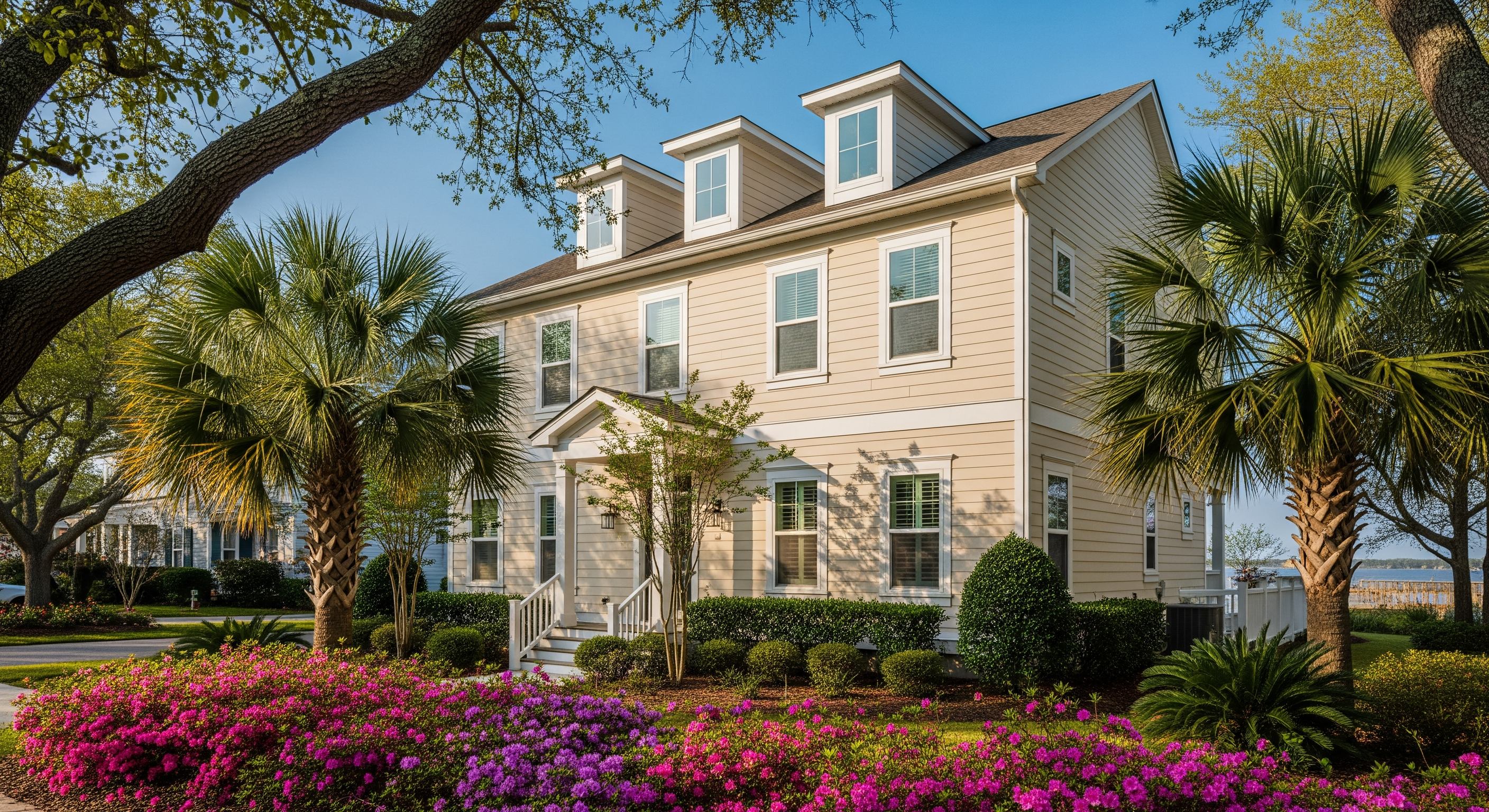
A homeowner in Porters Neck asked us why she had to clean her windows twice as often as her daughter did two hours inland. The answer sits in the air itself. Homes close to the water in Wilmington and Leland face a mix of contaminants that inland homes rarely deal with.
Why Does Everything Get Dirty So Fast Near the Wilmington Coast?
Your home gets dirty quickly here because salt air and humidity work together to trap grime on every surface. Salt air is a fine mist of airborne sea salt that drifts inland from the ocean and settles on siding, windows, roofs, and driveways.
Salt is hygroscopic, which means it pulls moisture out of the air and holds it. That thin, damp, salty film never fully dries, so dust, pollen, and mold spores stick to it instead of blowing away.
Humidity makes it worse. Wilmington sits in one of the more humid parts of the state, and the National Weather Service office in Wilmington tracks the warm, moist air that hangs over the Cape Fear region for much of the year. Damp surfaces are exactly what mold and algae need to grow.
The closer you are to the water, the stronger the effect. Homes in Wrightsville Beach and Carolina Beach take the heaviest salt load, while homes a little farther in, like those in Leland and Ogden, still get plenty of it on the wind.
What Is Actually Landing on Your Home Near the Water?
Several different things settle on a home near the water, and each one dirties a different surface.
Contaminant | Where it shows up first | Why it builds up fast here |
Salt film | Windows, screens, metal railings | Ocean wind carries it in and it clings to any damp surface |
Pollen | Siding, porches, decks, cars | Spring pine pollen coats everything and feeds algae |
Mold, mildew, and algae | Shaded siding, north-facing walls, roofs | Humidity and salt keep surfaces wet enough to grow |
Dust and road grime | Lower siding, driveways, walkways | Sticks to the salty film instead of rinsing away |
Spider webs | Eaves, corners, porch ceilings | Bugs thrive in the warm, damp air and draw spiders |
Mold and mildew are surface fungi that appear as black, gray, or powdery spotting, while algae forms a green or brown sheet-like film. Both need moisture, and the EPA notes that controlling moisture is the key to controlling mold. Near the water that moisture is almost always present, which is why the same house can look clean in April and green by July.
Window Cleaning in Wilmington, NC
How Often Should You Clean a Home Near the Wilmington Coast?
Homes near the water in Wilmington and Leland generally need exterior cleaning more often than inland homes, because the salt and humidity never take a break. A simple baseline schedule keeps grime from building into a bigger problem.
Windows: twice a year, since salt film clouds the glass fastest
House washing: once a year for most homes, more often on shaded or wooded lots
Roof washing: every one to two years to stay ahead of black streaks
Gutter cleaning: twice a year, in spring and fall
Driveways and walkways: once a year to clear algae and grime
Homes on wooded lots in communities like Brunswick Forest hold moisture longer and often need a house wash more than once a year. A home sitting in full sun a few blocks off the water may stretch a little longer between cleanings.
Which Parts of Your Home Show the Grime First?
The shaded, north-facing side of your home almost always shows dirt first, along with your windows and roof. These surfaces stay damp the longest and catch the most salt and spores.
Windows and screens cloud over quickly because the salt film sits right on the glass. Oxidation is the chalky white haze that forms on vinyl and metal surfaces as salt and sun break down the outer layer, and it often shows up on railings and gutters before anywhere else.
Last summer we washed a two-story home in Ogden where the back of the house faced a tree line. The shaded siding had turned a dull green while the sunny front still looked clean. After a gentle soft wash, both sides matched again, and the homeowner was surprised how much of what she thought was permanent staining simply rinsed away.
Roofs collect the dark streaks caused by Gloeocapsa magma, a blue-green algae that feeds on humidity and the filler in shingles. Left alone, these black streaks spread across the whole roof and hold even more moisture against your shingles.
This before and after from a recent job in Wrightsville Beach shows how much grime builds up on siding near the water.
House Washing in Wrightsville Beach, NC
Frequently Asked Questions About Coastal Grime in Wilmington NC
Why do my windows get dirty so fast near the beach?
Salt blowing in off the ocean settles on the glass and holds moisture, which traps dust and pollen in a cloudy film. This happens fastest for homes in Wrightsville Beach and Carolina Beach, but every home in the Wilmington area sees some of it. Cleaning your windows twice a year keeps the salt haze from becoming permanent.
Does living farther from the water mean less cleaning?
Usually yes, but not as much as people expect. Salt air travels several miles inland on the wind, so homes in Leland and Ogden still deal with it, just at a slower pace. Humidity affects the entire region regardless of distance from the beach.
Is the green stuff on my siding dirt or algae?
It is almost always algae, not ordinary dirt. Algae forms a green film that bonds to the surface and grows back thicker each season until it is treated at the root. A garden hose will not remove it for good.
Can I just pressure wash everything myself?
High pressure can crack siding, force water behind it, and strip protective coatings, so it is not the right tool for most home surfaces. A professional soft wash cleans safely at low pressure and kills the growth instead of just rinsing the top layer. It also keeps your home clean far longer.
By Nick Corbelli, Owner of Window Cleaning Wizards
Nick and his brother Chris have been cleaning homes across Wilmington, Leland, and the surrounding communities for years. They bring real hands-on experience to every job and answer the phone themselves when you call.
Living near the water should be about enjoying the view, not fighting a constant battle with grime. If your windows, siding, or roof are dirtier than you would like, call Nick and Chris at 910-727-4336 for a free estimate, or request a quote online anytime. We will tell you exactly what your home needs and give you the full price upfront, with no hidden fees.
This article was written with AI assistance and reviewed by Nick Corbelli, owner of Window Cleaning Wizards.