
What Causes Orange and Brown Stains on Exterior Walls Near Wilmington?

Updated: Sep 23
Orange and brown stains on exterior walls near Wilmington are almost always rust, not mold. Iron in irrigation water, corroding screws, and metal fixtures leave the color behind when the water dries. Standard house washing will not remove it, because rust needs an acid-based treatment instead of a mildew treatment.
Nick and Chris Corbelli have been cleaning homes across the Cape Fear region for years, and this is one of the most common questions they hear.
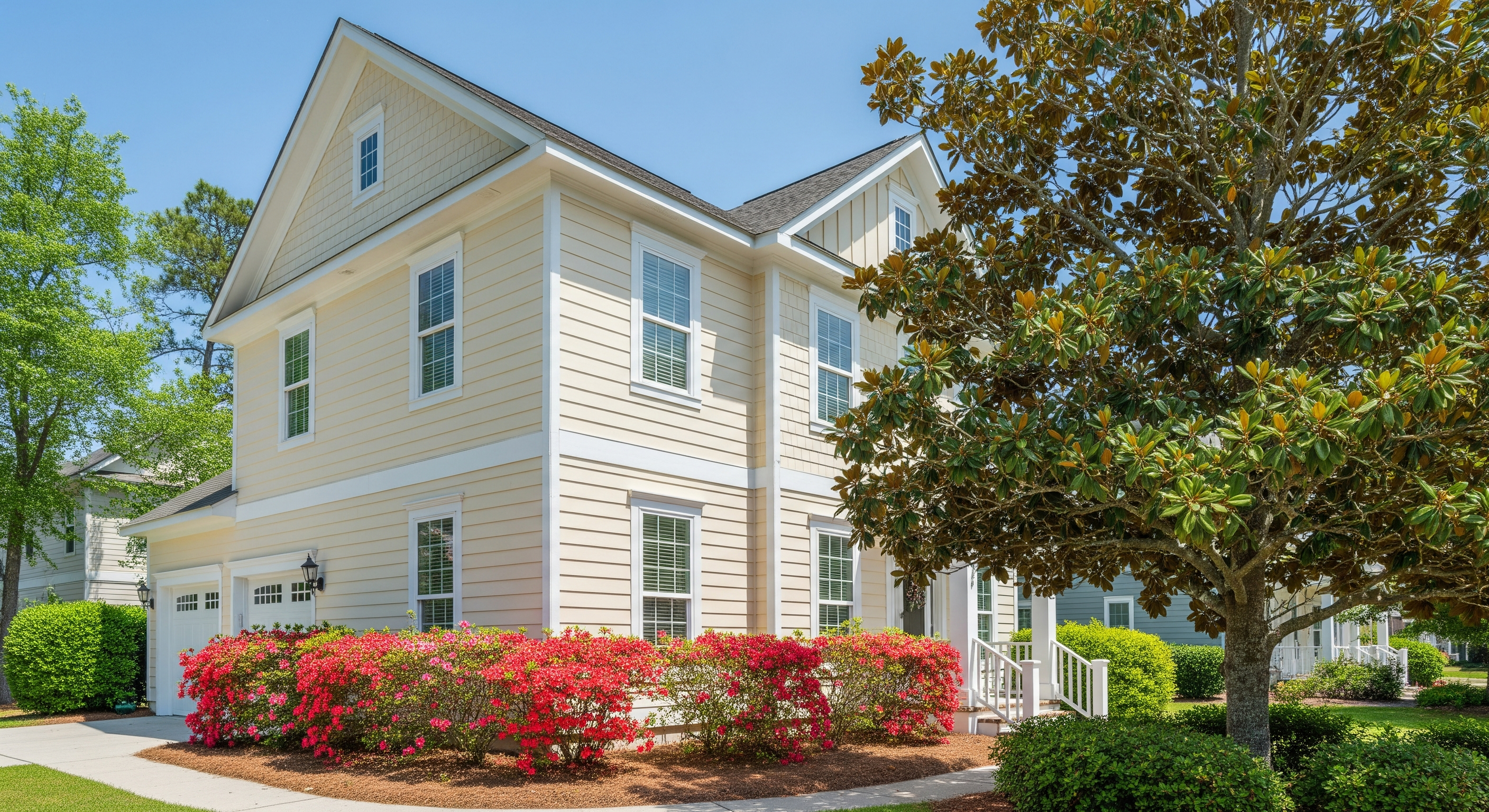
A homeowner in Porters Neck called us in June convinced she had a mold problem spreading up the back of her house. What she actually had was a sprinkler head throwing well water against the siding twice a day for three summers. The stain was iron, and the fix had nothing to do with mold.
That mix-up costs people money around Wilmington and Leland. They buy a house wash, the stain stays, and they assume the company cut corners.
Is the Orange Stain on My Siding Rust or Something Living?
Rust and algae look similar from the driveway and behave nothing alike up close.
Rust staining is the orange-brown discoloration left on a surface when iron in water oxidizes after the water dries. It is a mineral deposit, not a living organism. It will not spread on its own, it will not smell, and it does not get worse in the shade.
Algae and mildew do the opposite. They spread outward from the damp side of the house, they concentrate on north and east walls where the sun never fully dries the surface, and they come back on a predictable seasonal cycle.
Here is the field test we use on every job.
What You See | Likely Cause | Where It Shows Up | What Removes It |
Bright orange streaks, fan-shaped | Irrigation water with iron | Waist height and below, near sprinkler heads | Acid-based rust remover |
Orange teardrops under screw heads | Corroding fasteners | Around shutters, lights, hose bibs, vents | Rust remover plus replacing the fastener |
Red-brown splash at the foundation | Clay and soil splashback | Bottom 18 inches of the wall, under roof drip lines | Standard house wash |
Brown streaks running downward | Tannin bleed from wood | Below cedar trim, oak limbs, or pine debris | House wash, sometimes a second pass |
Green or gray film | Algae and mildew | North and east walls, shaded corners | Soft wash with a mildew solution |
Chalky white powder | Oxidation on old vinyl | Sun-facing walls on siding 15 years or older | Cleaning plus an oxidation treatment |
If you are still not sure, wipe a small spot with a wet white rag. Living growth smears green or gray onto the cloth. Rust barely transfers at all, because it has bonded to the surface rather than sitting on top of it.
Our guide to green algae versus black algae covers the living side of that chart in more detail.
Why Does Irrigation Water Leave Rust Streaks on Wilmington Homes?
This is the single biggest cause of orange staining we see in Wilmington and Leland, and almost nobody expects it.
Ferrous iron is dissolved iron that stays invisible in water until air reaches it, at which point it turns orange and bonds to whatever surface the water landed on. The water coming out of the sprinkler head looks perfectly clear. The stain shows up hours later.
The EPA sets a guideline of 0.3 milligrams per liter for iron in drinking water, and its own secondary standards guidance for nuisance chemicals lists rusty color and orange staining as the reason for that number rather than any health concern. Plenty of private wells across Brunswick and New Hanover County run above it.
Two things make this worse here than in most places. Irrigation systems run daily through a long growing season, so a wall gets sprayed hundreds of times a year. And our humidity keeps the surface damp longer after each cycle, which gives the iron more time to oxidize in place instead of drying and blowing off.
You can usually confirm it by geometry alone. Irrigation rust forms in a fan or arc shape that matches the sprinkler pattern, it stops at a consistent height, and it is heaviest on the wall closest to the head.
We cleaned a home on Sedgewren Loop in Compass Pointe last spring where the front wall was clean and the side wall facing the flower bed was orange from the foundation to the window sills. One misaimed rotor head had done all of it.
House Washing in Wilmington, NC
What Causes Brown Streaks That Run Down from the Roofline?
Brown streaks starting high on the wall are a different problem with a different fix.
Tannin bleed is the brown discoloration that appears when rain pulls natural wood compounds out of cedar, redwood, oak, or pine and carries them down onto the surface below. Paint manufacturers deal with this constantly, and Sherwin-Williams documents tannin staining as a recurring exterior finish problem rather than a cleaning failure.
Around Wilmington the usual sources are live oaks overhanging the roof, cedar shake accents, and pine straw beds stacked against the foundation. Rain runs through the organic material, picks up the tannins, and deposits them in vertical streaks.
Tannin stains are easier to remove than rust. Most of them lift with a standard house wash, though heavy staining on light siding sometimes needs a second application.
The catch is that tannin bleed comes straight back if the source stays. Trimming the limbs that overhang the roof, or pulling pine straw back a few inches from the wall, does more for the next two years than the cleaning itself does.
A customer on Woodwind Drive in Waterford had brown streaks down the entire back of a cream-colored house every single spring. The cleaning was the easy part. Cutting back the two oak limbs sitting over that roof section is what actually ended it.
Can Regular House Washing Remove Orange and Brown Stains?
Not the orange ones. This is where most homeowners get frustrated with the process.
A standard house wash uses a diluted sodium hypochlorite solution, which kills organic growth. Rust is a mineral, so bleach does nothing to it. In some cases bleach makes an orange stain look slightly worse by brightening the siding around it.
Oxalic acid is a mild acid used in professional rust removers that dissolves iron deposits without bleaching or etching the siding underneath. That is the correct tool for the job, and it is a separate step from the house wash with its own dwell time and its own rinse.
The order matters on a house that has both problems. We wash the organic growth off first, let the wall dry, then treat the rust so the acid works on bare iron staining rather than on a layer of mildew.
A few honest limits are worth knowing before you hire anyone.
Rust that has sat on vinyl for five or more years may lighten dramatically without disappearing entirely.
Painted surfaces respond well. Chalky, heavily oxidized vinyl responds less predictably, because the stain has worked into a degraded surface layer.
Brick and stone usually clean up better than siding, since the acid can dwell longer.
Any stain will return within a season if the sprinkler head, the corroded screw, or the overhanging limb stays exactly as it is.
If the wall is also chalky to the touch, our post on oxidation damage to vinyl siding explains why the surface behaves that way. For a refresher on what a proper low-pressure wash actually involves, see what soft washing is and why Wilmington homes need it.
How Much Does It Cost to Remove Rust Stains from Siding in Wilmington NC?
Rust removal is priced separately from house washing almost everywhere, because it is a different chemical, a different dwell, and a different amount of labor.
Scope of Work | Typical Price in Wilmington NC | Time on Site |
Spot rust treatment, one or two walls | $125 to $275 | 1 to 2 hours |
Full-perimeter rust treatment, single story | $250 to $450 | 2 to 4 hours |
Full-perimeter rust treatment, two story | $400 to $700 | 4 to 6 hours |
House wash plus rust treatment, bundled | $500 to $950 | Most of a day |
Tannin streak removal, add-on to a house wash | $0 to $150 | Usually included |
Most Wilmington homes with a genuine irrigation problem land between $250 and $450 for the rust work on its own. Bundling it with a house wash is nearly always cheaper than booking the two visits separately, since the setup, the water, and the plant protection only happen once.
Be careful with a quote that folds rust removal into a flat house-wash price with no discussion of the stain. Either the company has not looked closely, or they are planning to hit it with bleach and hope.
Window Cleaning Wizards quotes rust work as its own line item so you can see exactly what you are paying for. What we quote is what you pay, and we will tell you upfront if a stain looks like it will only lighten rather than disappear.
House Washing in Wrightsville Beach, NC
For staining on hard surfaces rather than walls, our guide to rust stains on concrete patios covers the same chemistry on a different material.
How Do You Stop Orange and Brown Stains from Coming Back?
Cleaning is the short half of this. Fixing the source is what buys you years.
Walk your irrigation zones once, in daylight, while they are running. Any head throwing water onto the house instead of the bed needs adjusting or a shorter nozzle, and that ten-minute job prevents the most expensive version of this problem.
Then work through the rest.
Adjust or replace every sprinkler head that reaches the wall, and move the arc away from siding, windows, and trim.
If the system runs on well water, ask a local irrigation contractor about an iron filter or a sequestering injector. Homes in Leland on private wells benefit the most from this.
Replace corroding screws on shutters, light fixtures, and hose bibs with stainless steel hardware.
Trim limbs that overhang the roof, especially oaks, so rain stops carrying tannins onto the wall.
Pull pine straw and mulch back three to four inches from the foundation so splashback does not stain the bottom course.
Rinse the walls closest to your irrigation zones with clean water a couple of times a year, which keeps light iron from setting in.
Homeowners in Landfall and Porters Neck who run irrigation on well water generally do best on a yearly cleaning schedule. Neighborhoods on municipal water can usually stretch to every 18 months, because the iron load is far lower.
Catch a rust stain in its first season and it comes off completely. Let it sit through three summers of Wilmington humidity and you are hoping for improvement instead of removal.
Frequently Asked Questions About Orange and Brown Stains on Siding in Wilmington NC
Will bleach or a regular house wash take orange stains off my siding?
No. Bleach kills organic growth like algae and mildew, and rust is a mineral deposit rather than something living. Removing orange staining requires an acid-based product, usually oxalic acid, applied as a separate step from the house wash.
Does rust staining mean my siding is damaged?
Usually not. Rust sits on the surface of vinyl, Hardie board, brick, and painted wood without eating into the material the way it would into bare metal. The exception is a corroding fastener, where the screw itself is failing and should be replaced with stainless steel hardware.
Can you remove rust stains from brick and concrete too?
Yes, and masonry often cleans up better than siding does because the acid can dwell longer on a hard surface. We handle rust on brick walls, concrete driveways, and paver walkways throughout Wilmington and Leland, though deeply set stains on porous concrete may lighten rather than vanish.
How long does it take to remove rust stains from a house?
A spot treatment on one or two walls takes one to two hours. A full-perimeter treatment on a two-story home in Wilmington runs four to six hours, and bundling it with a house wash usually fills most of a day.
Why did the orange stain come back a few months after cleaning?
Because the source is still there. A sprinkler head aimed at the wall, a corroding screw, or iron-rich well water will rebuild the stain within one irrigation season no matter how well the wall was cleaned.
If you have orange or brown stains on your walls and you are not sure what you are looking at, send us a photo and we will tell you straight. Call Nick and Chris at 910-727-4336 for a free estimate. We cover Wilmington, Leland, Porters Neck, Compass Pointe, Landfall, and the surrounding communities.
By Nick Corbelli, Owner of Window Cleaning Wizards
Nick and his brother Chris have been cleaning homes across Wilmington, Leland, and the surrounding communities for years. With a long track record of five-star Google reviews, they bring real hands-on experience to every job.
This article was written with AI assistance and reviewed by Nick Corbelli, owner of Window Cleaning Wizards.


Comments