
Pressure Washing Driveways in Southport NC: Algae, Moss, and Mold

Updated: Oct 7
Most concrete driveways in Southport need pressure washing about once a year to remove algae, moss, and mold before the growth turns slick enough to be dangerous. Driveways under heavy tree cover, or on the shaded side of a home, usually need it closer to every eight to ten months.
Nick and Chris Corbelli have been cleaning homes across the Cape Fear region for years, and this is one of the most common questions they hear.
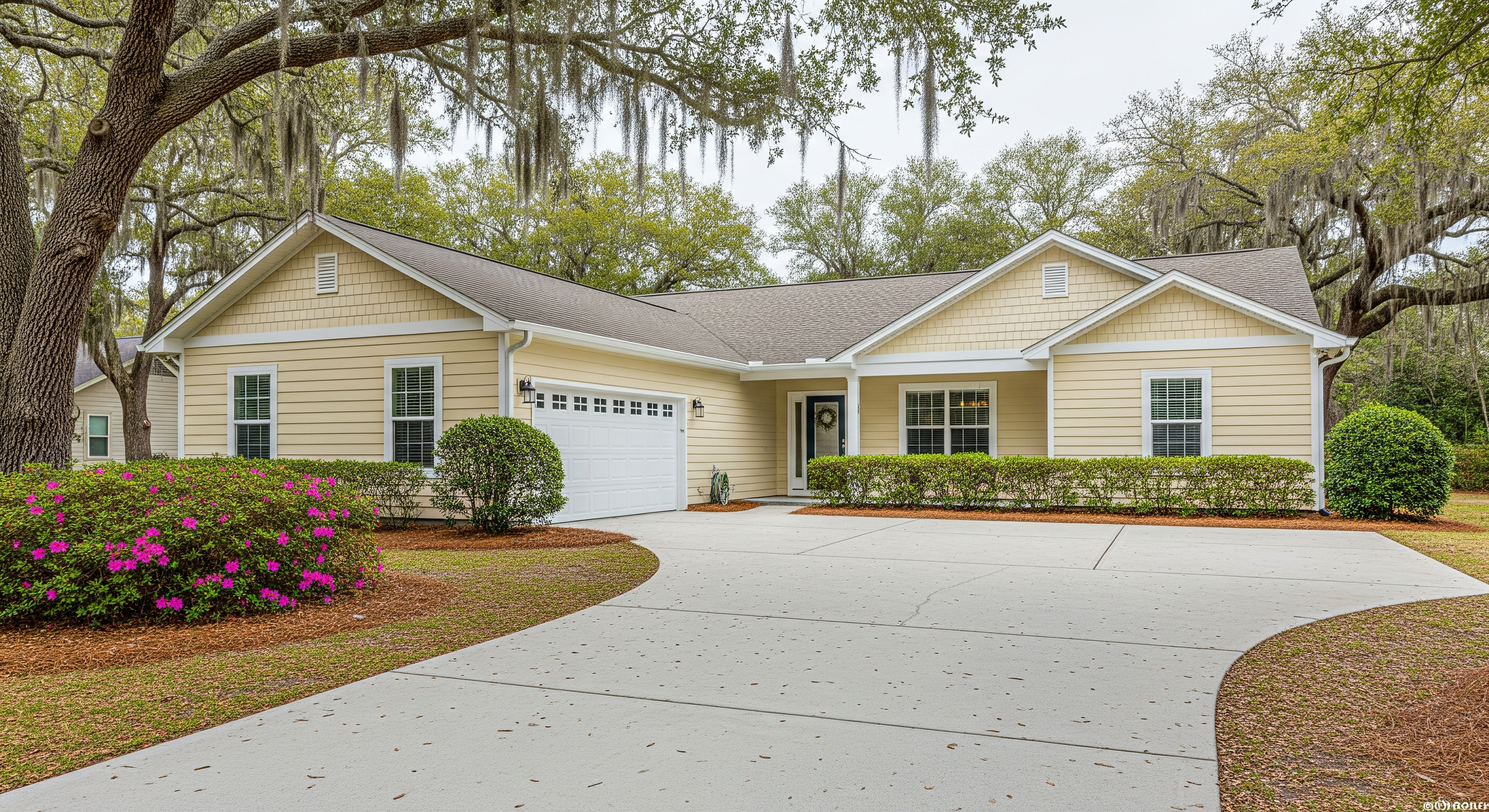
A homeowner in St. James Plantation called us in July after her mail carrier lost his footing on the green film near the bottom of her driveway. She had lived in that house for eleven years and had never once thought of her concrete as a safety issue. It just went from grey to green so slowly that she stopped seeing it.
That is how it usually happens in Southport. The growth does not show up overnight. It creeps.
What Is the Green and Black Stuff Growing on My Driveway in Southport?
The green, black, and fuzzy growth on a Southport driveway is almost always one of three organisms: algae, moss, or mold. They look different, they cause different problems, and they need different treatment.
Algae is a simple plant-like organism that spreads across damp concrete as a thin green or black film, feeding on moisture and the fine dust that settles out of the air. Algae is the most common growth we find on driveways in Brunswick County.
Moss is a dense, low-growing plant that anchors into the pores and cracks of concrete and holds water against the surface long after the rest of the driveway has dried. Moss is the one that causes lasting damage, because those anchor points widen existing cracks season after season.
Mold and mildew are fungal growths that appear as black or grey blotches, usually along the edges where the driveway meets grass, mulch, or a shaded flower bed.
What You See | What It Is | Where It Shows Up First | Why It Matters |
Thin green or black film | Algae | Open concrete, tire paths, low spots | Slippery when wet, spreads fast |
Thick green cushion | Moss | Cracks, expansion joints, shaded edges | Widens cracks, holds water year-round |
Black or grey blotches | Mold and mildew | Grass line, mulch beds, under downspouts | Stains deep into the pores of the concrete |
Orange or rust streaks | Iron staining | Near irrigation heads and metal furniture | Needs a separate treatment, not just pressure |
Knowing which one you have matters. Pressure alone will lift algae off the surface, but moss and mold need a chemical treatment first or they come back within weeks.
Why Do Driveways in Southport NC Grow Algae and Moss So Fast?
Southport driveways grow algae and moss quickly because the town sits where the Cape Fear River meets the ocean, and summers here run hot and humid for months at a time. Concrete simply stays damp longer than it would inland.
Three local conditions speed the whole process up:
Shade. Live oaks and long-leaf pines shade most older Southport lots, and shaded concrete can stay wet for a full day after a summer rain.
Moisture. Humidity stays high nearly year-round, and irrigation overspray keeps the edges of a driveway damp even during a dry stretch.
Organic debris. Pine straw, oak tannin, and spring pollen give algae and moss the food they need to establish a colony.
Homes in St. James Plantation and along Ridge Crest Drive tend to see it worst on the shaded north side of the drive. The sunny half looks fine while the shaded half goes green, which is why so many Southport driveways end up with that split, two-tone look.
The same thing happens in Leland and Wilmington, though it usually takes a few months longer away from the water. The end result is the same slippery algae layer on the driveway that catches people off guard after a rain.
Is Pressure Washing Safe for an Older Concrete Driveway?
Pressure washing is safe for older concrete driveways when it is done with a surface cleaner at the right pressure. The damage people worry about comes from pointing a narrow, high-pressure tip directly at the slab, which etches lines into the concrete and leaves permanent striping.
A surface cleaner is a rotating attachment that spreads the water across a wide circular head, so the pressure is distributed evenly instead of concentrated in one spot. We run an eight gallon per minute machine and a four gallon per minute machine, and the surface cleaner does nearly all of the driveway work.
Two things we do differently on every driveway:
We double-pass the whole slab. One pass leaves the faint arc lines you see on driveways all over Brunswick County once they dry. A second pass at a different angle erases them.
We post-treat with an algae inhibitor. Post-treatment is a light chemical application after the rinse that kills the remaining spores at the root, so the green takes considerably longer to return.
Last spring we cleaned a driveway off Polly Gully Court in St. James Plantation where the homeowner had already tried a rental machine. Half the slab had visible stripe marks from the narrow tip. The double-pass with the surface cleaner evened out the tone across the whole driveway, and the post-treatment kept it clean through the rest of the summer.
Concrete and brick do not respond to pressure the same way, which is worth understanding before anyone starts spraying your walkways too. We cover that in our guide to pressure washing brick versus concrete.
Pressure Washing in Wilmington, NC
How Often Should You Pressure Wash a Driveway in Southport, North Carolina?
Once a year is the right schedule for most Southport driveways. A few situations call for more:
Every 8 to 10 months if the driveway is heavily shaded by live oaks or pines
Once a year for a standard driveway with a mix of sun and shade
Every 18 months for a full-sun driveway with no tree cover and good drainage
Right away if the surface feels slick underfoot, regardless of when it was last cleaned
The slick test is the one that matters most. If you can feel your shoe slide even slightly on damp concrete, the algae layer is already thick enough to be a fall risk, and that is not something to schedule around.
Homeowners who let it go for several years usually find the staining has soaked into the pores of the concrete, and it takes a much longer chemical dwell time to pull back out. Skipping exterior cleaning for a full year has a real cost on every surface of the house, not just the driveway.
How Much Does Pressure Washing a Driveway Cost in Southport NC?
Professional driveway pressure washing generally runs between $0.25 and $0.55 per square foot, which puts a standard two-car driveway of 400 to 600 square feet in the $150 to $300 range. Most companies also carry a minimum service charge of $100 to $150 to cover the drive out and setup.
A few things move the number:
Size and shape. Long driveways with turnarounds or extra parking pads take more time.
Condition. A driveway with five years of moss growth needs a chemical dwell step that a yearly-maintained driveway does not.
Add-ons. Walkways, sidewalks, and pool decks are usually quoted alongside the driveway at a better combined rate than booking them separately.
Window Cleaning Wizards includes the double pass and the post-treatment in the quoted price. The price we give on the phone is the price on the invoice, with no additions on the day of the job. The same goes if you add gutter cleaning in Southport to the same visit.
Frequently Asked Questions About Driveway Pressure Washing in Southport NC
Will pressure washing crack my older concrete driveway?
Pressure washing will not crack sound concrete when a surface cleaner is used at appropriate pressure. Cracking risk comes from concrete that is less than a year old, or from a narrow high-pressure tip held in one spot. A professional crew adjusts pressure based on the age and condition of the slab.
How long before I can park on my driveway after it is pressure washed?
You can park on a freshly pressure washed driveway as soon as the surface is dry to the touch, usually two to four hours depending on humidity and sun exposure. If an algae inhibitor was applied, waiting until the end of the day gives the treatment time to soak fully into the concrete.
Does pressure washing remove moss growing in the cracks?
Pressure washing removes the visible moss, but moss anchored deep in an expansion joint needs a chemical treatment to kill the root structure. Without that step the moss regrows from the crack within a few weeks. We treat cracks and joints separately on driveways in Southport and Leland where moss has been established for years.
Do you put anything on the driveway afterward to keep the algae from coming back?
Yes. We post-treat every driveway with an algae inhibitor after the final rinse. This step kills the remaining spores at the root and evens out the tone across the slab, which is what keeps a driveway looking clean for months rather than weeks.
By Nick Corbelli, Owner of Window Cleaning Wizards
Nick and his brother Chris have been cleaning homes across Wilmington, Leland, and surrounding communities for years. With a long track record of five-star Google reviews, they bring real hands-on experience to every job.
If your driveway in Southport has gone green, or you are just not comfortable walking down it after a rain, call Nick and Chris at 910-727-4336 for a free estimate. We will tell you honestly whether it needs cleaning now or whether it can wait until spring.
This article was written with AI assistance and reviewed by Nick Corbelli, owner of Window Cleaning Wizards.


Comments