

How to Document Your Exterior Cleaning for HOA Compliance in Compass Pointe

Updated: Sep 23
Document your exterior cleaning for HOA compliance with three things: dated before and after photos, a paid invoice from a licensed contractor listing your address and the services performed, and a written note to the board confirming the completion date. Most boards close the violation file within one to two weeks of receiving all three.
With five-star Google reviews all across Wilmington and Leland, Window Cleaning Wizards has seen this firsthand.
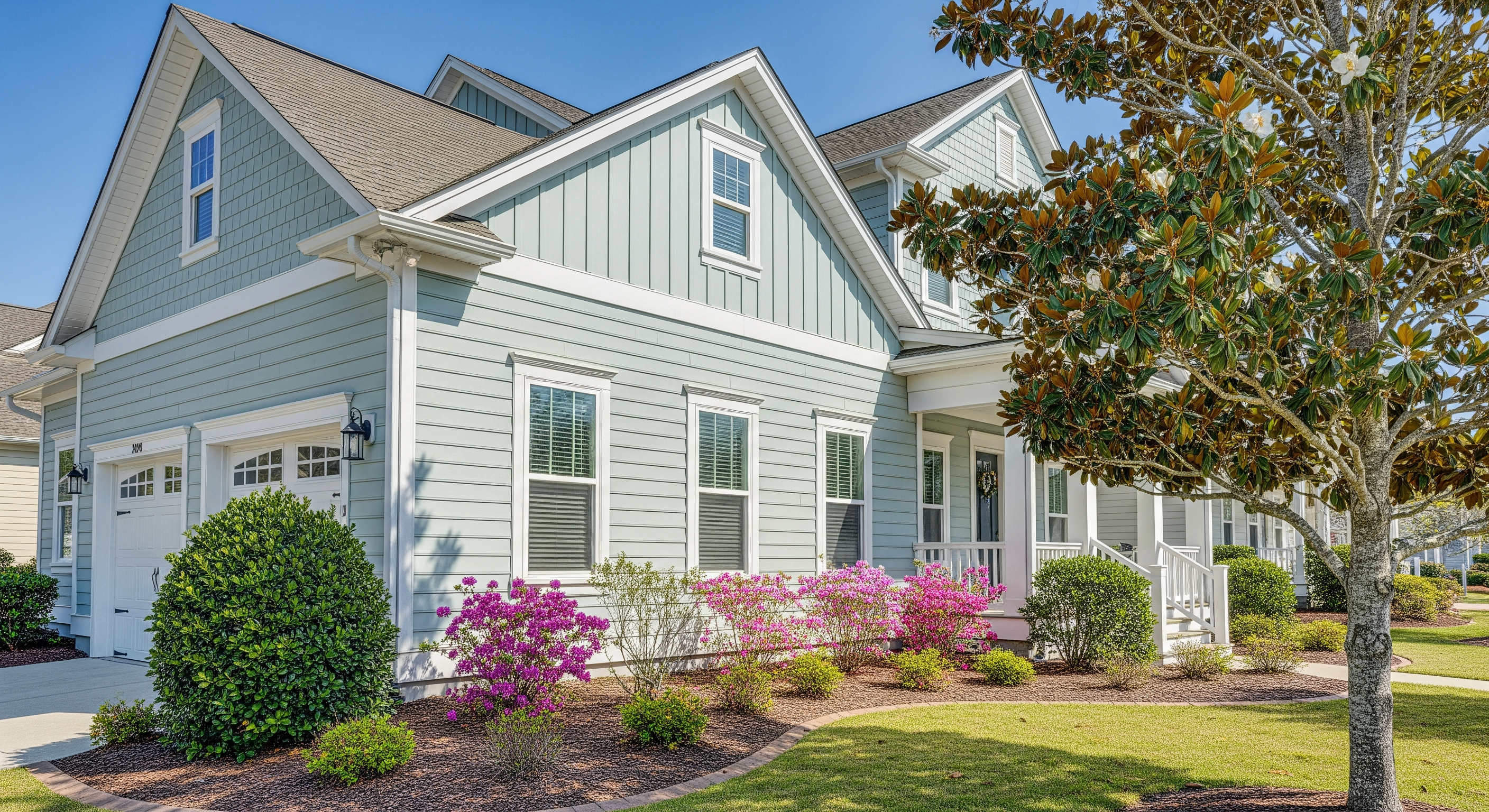
Last spring we pulled into a driveway on Sedgewren Loop in Compass Pointe where the homeowner had already solved her problem. The north wall of her house had gone green over the winter, she hired it washed, and the siding came out clean. She still had a second letter from the board sitting on her kitchen counter, because nobody had ever told the HOA the work was finished.
That is the part most homeowners miss. Getting the house clean is only half the job. The other half is proving it, in writing, to a board working off a photo somebody took from the street six weeks ago.
Here is exactly what to collect, how to collect it, when to send it, and what North Carolina law says your association has to do before it can fine you.
What Does an HOA in Leland Actually Accept as Proof of Exterior Cleaning?
Most HOAs in Leland accept dated photos plus a contractor invoice. A compliance record is the written and photographic proof that shows your board the violation has been corrected, who corrected it, and on what date.
Boards are not trying to make this hard. The person reading your response is usually a volunteer neighbor or a property manager working through dozens of open files, and they need something they can attach to your file and mark closed. Give them a clean packet and the file closes. Give them a one-line email that says "it's done," and it sits.
Here is what to gather and what each piece proves.
Document | What It Proves | Where It Comes From |
Before photo of the flagged surface | The condition the board cited actually existed | Your phone, taken before the crew starts |
After photo from the same angle | The condition has been corrected | Your phone or your contractor |
Paid invoice with date and address | A real, paid job happened at your property | Your cleaning company |
Itemized service description | The right method was used on the right surfaces | Line items on the invoice |
Certificate of insurance | The contractor was licensed and insured in North Carolina | Your cleaning company, on request |
Written response to the board | You responded inside the cure period | Your email, with a timestamp |
Two details matter more than people expect. The first is the camera angle. Shoot the after photo from the same spot as the before photo so the board sees the same wall, the same shrubs, and the same window line, because a matched pair is instantly readable and a pair shot from two different corners of the yard is not.
The second is the date. A photo with no date is not evidence. Send the original image file rather than a screenshot or a text-message copy, since the original carries its timestamp inside it and a screenshot strips that out.
There are also things worth leaving out. Do not send a long explanation of why the siding got dirty, do not attach ten photos when two will do, and do not send anything that argues the violation was unfair unless you actually intend to contest it. A compliance packet and a dispute letter are two different documents, and mixing them slows both down.
If your letter cited "dirty siding" or "mildew," it helps to know what the board was actually looking at. Our guide on why your HOA violation for dirty siding might actually be algae explains why that distinction changes the fix.
How Do You Document a Soft Wash or Pressure Wash Step by Step?
Document the job in seven steps, starting before the crew arrives and finishing with a single email the same week. Soft washing is a low-pressure cleaning method that uses cleaning solutions to kill algae and mildew at the root instead of blasting them off the siding, and it is the method most Leland associations expect on vinyl, Hardie board, and stucco.
Photograph the flagged area before anything is touched. Take one wide shot of the whole wall and one close shot of the worst section.
Photograph the violation letter itself. Keep the date, the file number, and the exact wording of the complaint in the same folder as your photos.
Get a written scope from your contractor before the job. The invoice should name the surfaces, not just say "exterior cleaning."
Take the after photos in daylight, from the same spots. Overcast light is better than harsh afternoon sun, which throws shadows that can read as staining in a photograph.
Get the paid invoice in writing, not verbally. Email is best because it timestamps itself.
Request the certificate of insurance if the letter asked for a licensed contractor. Most companies send it within a day.
Send everything in one message to the board or management company. One email, three attachments, two sentences of explanation.
Do not spread this across three emails over two weeks. A single packet is what gets a file closed.
House Washing in Compass Pointe, Leland NC
The photo above is a Compass Pointe home where the board had flagged the shaded side of the house. The after shot was taken from the same position as the before shot, which is what makes it usable as evidence rather than just a nice picture.
When Window Cleaning Wizards handles a violation job, the photos and the itemized invoice come with the work, so homeowners are not standing in the yard trying to line up a camera angle three days later. We also protect the flower beds and landscaping during the wash, which matters in communities where the plantings are part of what the association inspects.
When Should You Send Your HOA Compliance Documentation?
Send your documentation the same week the work is finished, and always before the cure period on your letter runs out. A cure period is the window of time your association gives you to fix a violation before a hearing or a fine can move forward, and in most Leland communities it runs somewhere between 10 and 30 days from the date printed on the notice.
Waiting is the most common mistake we see. Homeowners get the house washed, feel relieved, and assume someone from the board will drive by and notice. Boards do not work that way. The file stays open until somebody submits something into it, and open files roll forward to the next meeting, which is where fines get discussed.
Three timing rules keep you out of trouble.
Respond in writing even if the work is not scheduled yet. A short email saying the wash is booked for a specific date shows good faith and starts a paper trail before the deadline.
Do not wait for the after photos to send your first reply. Acknowledge the notice right away, then send the proof as a follow-up on the same email thread so everything stays in one place.
Ask for written confirmation that the file is closed. If nobody confirms, you have no record that the matter ever ended.
It also helps to know who you are writing to. A self-managed association in a smaller Leland neighborhood may be run by two or three volunteers who read email in the evenings, while larger communities use a management company with a formal portal and a ticket number. Submit through the channel named on your letter, and if the letter gives both an email and a portal, use both.
Summer rain complicates the schedule around here. If a storm pushes your appointment past the deadline, email the board with the new date before the deadline passes, not after. Associations are far more forgiving of a delay they were told about in advance than one they discover on their own.
For a broader look at what boards in this area expect year to year, see our breakdown of what exterior cleaning HOAs in Leland, North Carolina actually require.
What Are Your Rights If the HOA Rejects Your Proof in North Carolina?
You have the right to notice, a hearing, and an appeal before an HOA in North Carolina can fine you. North Carolina's Planned Community Act sets out the procedure an association has to follow before imposing a fine or suspending privileges, and reading that section once is worth the ten minutes.
The protections are specific:
The association must hold a hearing before the executive board or an adjudicatory panel, and that panel cannot be made up of officers or board members.
You must be given notice of the charge, an opportunity to be heard, a chance to present evidence, and written notice of the decision.
A fine cannot exceed $100 for the violation, plus $100 per day for each day the violation continues more than five days after the decision.
You may appeal a panel's decision to the full executive board by delivering written notice of appeal within 15 days of the decision date.
Your documentation is the evidence you present at that hearing. A dated invoice paired with matched before and after photos is difficult to argue with, which is exactly why the packet matters even when you are confident the board will accept it without a fight.
House Washing in Brunswick Forest, NC
If a dispute goes further than it should, the North Carolina Department of Justice keeps a consumer page on homeowners associations with guidance on filing a complaint. Most situations never get close to that. In our experience, a board that rejects proof is usually rejecting incomplete proof, and adding the missing invoice or a clearer photo settles it.
We watched that play out on Oak Abbey Trail in Compass Pointe. The homeowner's first submission was a single cell phone photo taken at dusk, and the board could not tell what it was looking at. We sent back a daylight photo of the same wall alongside the itemized invoice, and the file closed that week without a hearing.
How Do You Keep Records So You Never Get Another Violation?
Keep one folder and clean on a schedule, and you stop reacting to letters altogether. The homeowners who never get violations are not lucky. They wash the house before the algae is visible from the street, and they keep the receipts in one place.
Start a folder, digital or paper, and put four things in it every year: the invoice, the date of service, one photo of the finished house, and the next scheduled date. That folder does double duty. It answers a board instantly, and it becomes part of your maintenance record if you ever sell the house.
Knowing which surfaces boards flag most often helps too. In Leland and Wilmington communities, the repeat offenders are the shaded north wall, the garage door surround, the driveway and walkway, the fence line along a common area, and the mailbox post. Those are the spots a board member notices from a car, and they are the spots worth checking each spring.
On timing, most homes in Leland and Wilmington need a house wash every 12 to 18 months, and shaded north-facing walls tend to be closer to 12. Homes under pine canopy or backing up to a pond green up faster than homes on open lots, which is why two neighbors on the same street can honestly be on different schedules.
A standing appointment removes the guesswork. Booking the same month every year means the wash happens before the growth is visible from the street, and a board never has a reason to write. For homeowners who would rather not track any of it, our guide to the best exterior cleaning options for seniors in Leland, North Carolina walks through how a recurring schedule works. If you are unsure which method your siding actually needs, our overview of what soft washing is and why Wilmington homes need it covers the difference between a low-pressure wash and a pressure rinse.
And if a letter has already landed and the clock is running, the fastest path is the one we walked through with a homeowner in Brunswick Forest who fixed an HOA violation in 48 hours.
Frequently Asked Questions About HOA Exterior Cleaning Compliance in Leland NC
Does my HOA need the invoice, or are photos enough?
Send both. Photos show the condition was corrected, and the invoice proves a real, paid job happened at your address on a specific date. Boards in Leland communities like Compass Pointe and Brunswick Forest close files faster when both pieces arrive in the same message.
Can I document the cleaning myself if I did the work?
Yes. Take dated before and after photos from the same angle and keep receipts for cleaning products or equipment rental. The one thing you cannot supply is a contractor's certificate of insurance, so if your violation letter specifically requires a licensed contractor, do-it-yourself documentation will not close the file.
How long should I keep exterior cleaning records?
Keep them at least three years, and keep every year of records if you plan to sell the home. A documented maintenance history helps at closing and protects you if a board ever cites a repeat violation on the same surface.
What if the algae comes back before the board closes my file?
Email the board with a fresh photo and a new service date rather than waiting for them to notice. Regrowth within a few months usually means the surface was rinsed rather than treated, so ask your contractor whether a cleaning solution was actually applied or whether the siding was only pressure rinsed.
By Nick Corbelli, Owner of Window Cleaning Wizards
Nick and his brother Chris have been cleaning homes across Wilmington, Leland, and the surrounding communities for years. With a long track record of five-star Google reviews, they bring real hands-on experience to every job.
If a violation letter is sitting on your kitchen counter, you do not have to sort out the paperwork alone. Call Nick and Chris at 910-727-4336 for a free estimate, or request a quote online anytime. We will clean the surfaces your board flagged, protect your landscaping, and hand you the dated photos and itemized invoice your HOA needs to close the file.
This article was written with AI assistance and reviewed by Nick Corbelli, owner of Window Cleaning Wizards.


Comments